ADHD and Losing Things: Why It Happens and What Helps

Contents·12
Losing things is literally in the diagnostic criteria for ADHD. "Often loses things necessary for tasks or activities" is one of the nine inattention symptoms in the DSM-5. Keys, wallet, headphones, the form you were holding two minutes ago. If that's your daily life, it's not a character flaw. It's a symptom with a mechanism, and you can build around a mechanism.
Why ADHD brains lose things
ADHD brains lose things for two mechanical reasons: the item's location often never gets encoded into working memory in the first place, and once an object leaves your visual field it tends to drop out of your mental model of the home. Both are executive-function gaps, not carelessness.
The location never gets saved. Putting your keys down is a small memory event, a job for working memory, one of the executive functions ADHD hits hardest. A neurotypical brain encodes it in passing: keys, kitchen counter, done. An ADHD brain that's already three thoughts ahead often never encodes the location at all. You're not forgetting where you put your keys. The information was never stored in the first place. That's why retracing your steps can feel like searching someone else's house.
Out of sight really is out of mind. Many people with ADHD describe the same experience: once an object is behind a door or inside a drawer, it stops existing. A closed drawer might as well be another dimension. This is the experience usually called ADHD object permanence, which turns out to be the wrong name for a real problem.
ADHD clutter is a filing system
The same two mechanisms explain ADHD clutter. From the outside it looks like chaos. From the inside it's usually a storage strategy: if putting something away means losing it, the safest place for everything is out, visible, on a surface. The pile on the desk is a filing system. The cost is that the piles grow until nothing is findable anyway, and the visual noise makes everything else harder too.
So the fix, for the clutter and the losing alike, isn't "be more careful". Trying harder at a memory step your brain skips is fighting your own neurology, and you'll lose. Build systems where remembering isn't your job anymore.
Give your most-lost items exactly one home
Pick the five things you lose most. For most people: keys, wallet, phone, headphones, glasses. Each one gets a single, permanent home, ideally in one spot by the door. A bowl, a hook, a small tray. Some people call it a launch pad.

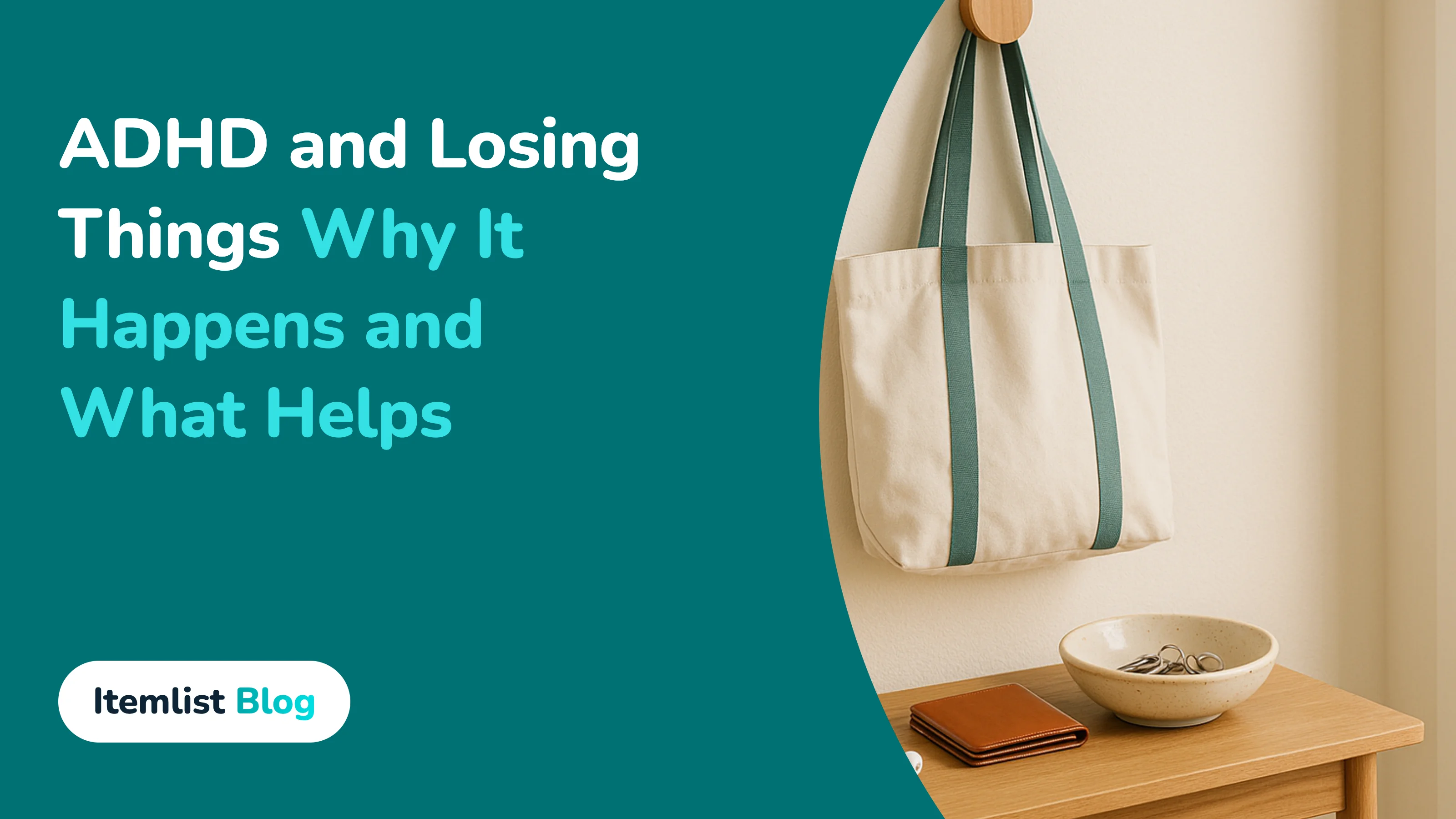
One spot by the door: bowl for keys, wallet, earbuds, bag on the hook
It works because it removes the decision. You aren't choosing where to put your keys each time you walk in, and choice is exactly where the encoding failure happens. Same place, every time, no thinking. Within a couple of weeks the bowl stops being a rule you follow and becomes the place your hand goes on its own.
Three details that make or break it:
- The home has to be where the item naturally lands, not where it "should" go. If you always drop your headphones next to the couch, the tray goes next to the couch.
- One home per item. A backup spot is just two places to search.
- When you have to put something somewhere unusual, narrate it out loud: "passport, top desk drawer". Saying it forces the encoding step your brain would otherwise skip.
Make your storage transparent
Since out of sight is out of mind, stop hiding things from yourself. Clear bins instead of opaque ones. Open shelving where it makes sense. Labels facing out, written for the tired version of you, not the organized version.
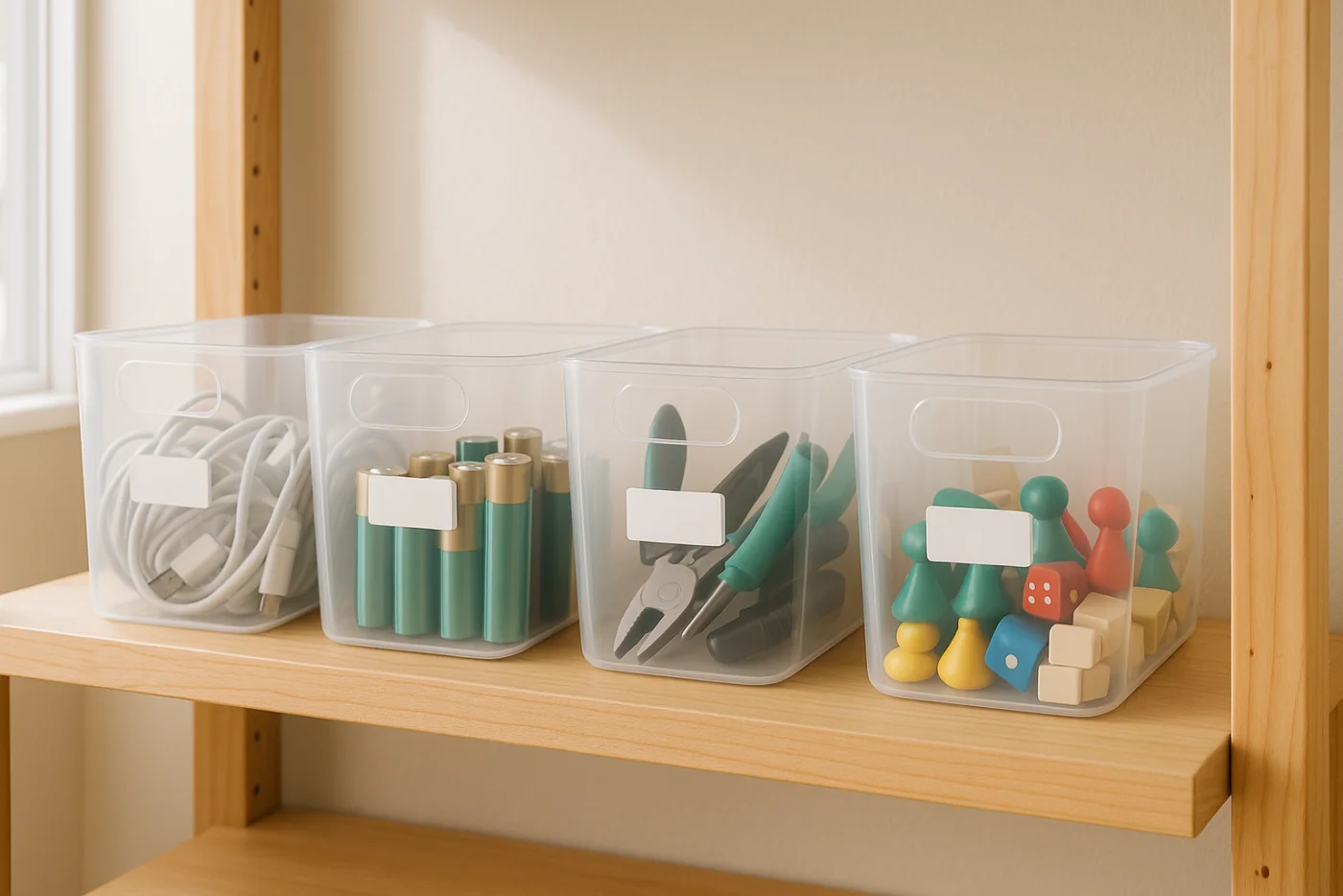
See-through bins: everything off the counter, nothing hidden from yourself
This is also the honest answer to surface clutter. You can't beat "everything must stay visible" with cabinets that make things invisible. Storage that stays see-through while clearing the counter can win: a clear bin on a shelf holds the same objects as the pile did, but now they have an address. And for everything a see-through bin can't show you, a searchable index does the same job. That's what the inventory layer further down is for.
I collected more of these in ADHD home organization hacks and the matching tools list, so I won't repeat them all here.
Contain the doom pile instead of sorting it
If you have ADHD you probably know the doom pile, or its cousin the doom box: the heap of unrelated stuff you'll deal with "later". The standard advice is to sort it. The standard result is that sorting stalls twenty minutes in and the pile survives.
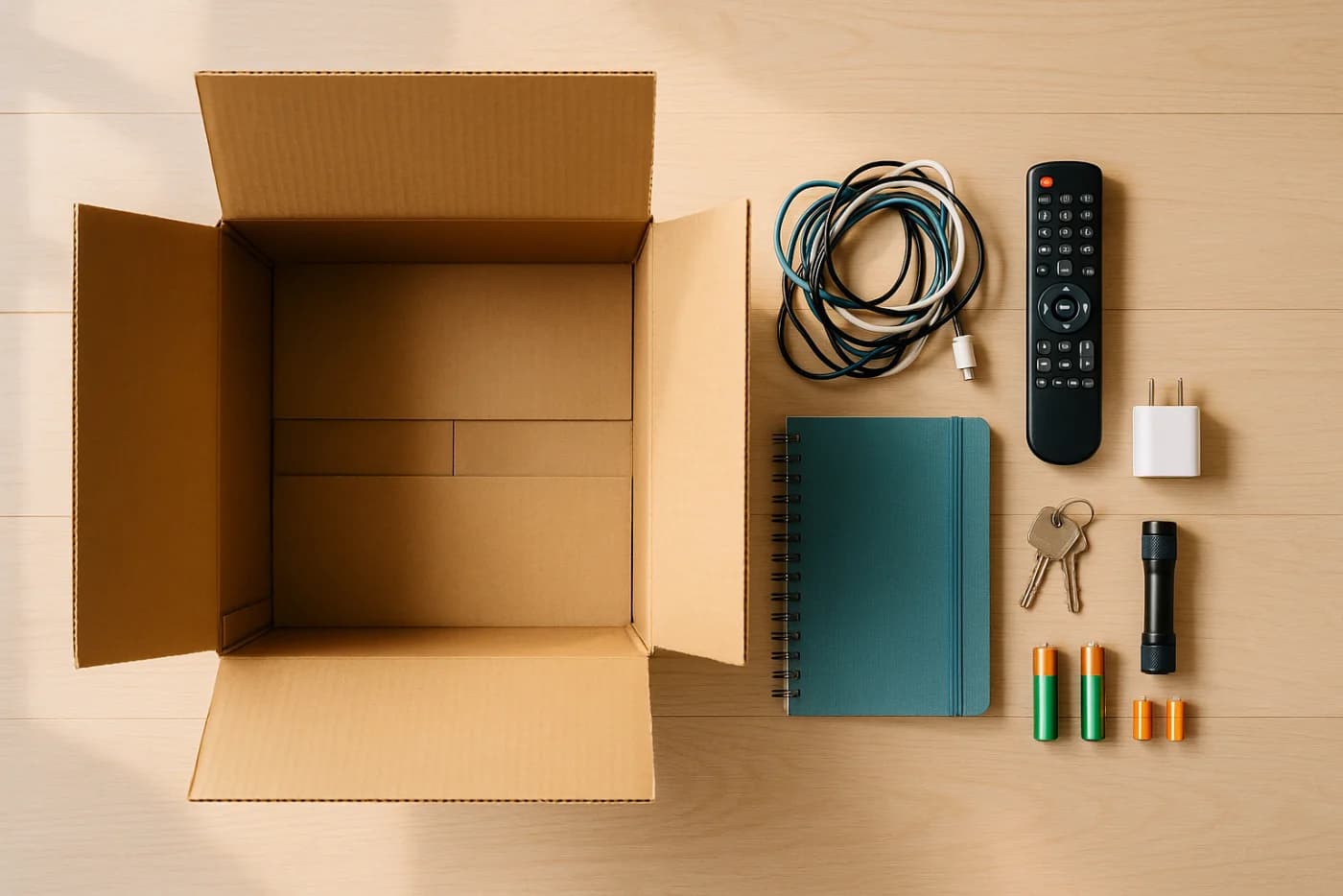
Spread it out, take one photo, box it. The photo is the index
Skip the sorting. Put the pile in a box, take one photo of the contents spread out, label the box with a date, and shelve it. The stuff is contained, the surface is clear, and the photo means you can answer "is the spare HDMI cable in there?" without excavating. Sorting can happen someday or never. The photo doesn't care.
Move the memory out of your head
Everything above keeps daily items findable. The last layer covers everything else you own: the stuff in bins, closets, the basement, the storage unit. The stuff you find by memory, except your memory declines to cooperate.
Itemlist is my home inventory app, and this failure mode is exactly what it's for. You photograph an item and file it where it physically lives: location, room, container. Containers nest inside containers, so "the gray bin inside the wardrobe in the guest room" is a real, saved address. From then on, finding something is a search, not a memory test. Search covers names, brands, notes, and serial numbers, and it works offline. On the Pro plan you can share a location with the people you live with, which quietly retires the "where do we keep the..." question, because they can look it up themselves.
The ADHD-realistic way to start isn't cataloging your whole home. That project becomes its own doom pile by Tuesday. Start with the ten or twenty things you actually lose or get asked about: chargers, adapters, spare keys, documents, medication, batteries, that one specific cable. The free plan covers 100 items, which is more than enough for the stuff that hurts.
Download Itemlist from the App Store, free to start.
Common questions
Is losing things actually an ADHD symptom, or am I just careless?
It's a symptom. "Often loses things necessary for tasks or activities" is one of the DSM-5's nine inattention criteria, and the mechanism is working memory: the location never gets encoded. That's neurology, not a character choice.
What's the difference between ADHD clutter and hoarding?
ADHD clutter is usually functional: things stay out so they stay findable, and letting go is easy once a system exists. Hoarding disorder involves emotional attachment and real distress when discarding. It's a separate clinical condition, so if you're genuinely unsure, talk to a professional.
Do Bluetooth trackers like AirTags fix this?
They rescue the handful of things you carry daily, and for keys and wallets they're worth it. But nobody tags the passport, the spare charger, or anything already in a bin. Trackers get back the few things you carry. They don't stop you losing everything else.
How do I keep track of the things I don't use every day?
That's the inventory layer. For bins, closets, the basement, and the storage unit, photograph each item once, file it where it physically lives, and let search do the remembering. The nested locations in Itemlist mirror your real home, so the answer is one search away instead of one excavation away.
Start with the bowl
You don't need to build all of this in one weekend, and you shouldn't try. One piece at a time, whenever the current annoyance peaks, is the ADHD-realistic pace: the bowl tonight, the rest as it hurts.
None of this cures ADHD. It moves the job of remembering where things are out of your head and into systems that keep working when your attention doesn't, and losing things stops being the default.

![How to Organize Your Home with ADHD [5 ADHD Adult Organization Tools]](/_next/image/?url=%2Fstatic%2Fimages%2Fblog%2Fadhd-home-organization-tools%2FBlog-ADHD-Adult-Organization-Tools-1.jpg&w=3840&q=75&dpl=dpl_8GogH35nJzXuLqmCA4GhMWp4dYQv)
