The 7 Best Decluttering Apps for Every Stage of Letting Go

Contents·15
The best decluttering apps in 2026 are FlyLady for a system that tells you where to start, Itemlist for deciding what stays, OfferUp for selling the big stuff, Mercari for selling the small stuff, BuyNothing for giving things away, Ridwell for the pile nobody will buy or take, and Tody for keeping the clutter from growing back. One app per stage, all verified live on the App Store in August 2026.
Here's the odd part: the apps named "declutter" failed that check. Clutterfree, the most commonly recommended name in these roundups, sits at 3.4 stars. Decluttify is at 3.1 after one release. TOSS, still featured on ranking lists today, is gone from the US App Store entirely. The category's famous names are its weakest apps, so this list is built from the apps that do each decluttering job well, whatever their name says.
| App | Stage of decluttering | US rating | Price |
|---|---|---|---|
| FlyLady | Starting when you're overwhelmed | 4.9 | Free to download; subscription for full access |
| Itemlist | Deciding what stays | 4.7 | Free to start; PRO $29.99/yr or $59.99 lifetime |
| OfferUp | Selling furniture and big items | 4.8 | Free for local sales |
| Mercari | Selling small items by mail | 4.8 | Free to list; fee when it sells |
| BuyNothing | Giving things away | 4.3 | Free |
| Ridwell | Recycling what's left | 4.9 | Pickups from $20/month |
| Tody | Keeping the house that way | 4.8 | Free to download; premium unlock |
Clutter is not a niche problem. In a 2025 StorageCafe survey of 2,824 Americans, 42% said clutter in their home overwhelms them frequently or all the time, and another 28% feel it at least occasionally. Clutter and putting things off also travel together: in a DePaul University study of 346 young adults, self-reported clutter was the strongest statistical predictor of procrastination (a correlation, not a proven cause). My wife and I did our biggest decluttering pass ever in October 2025, when we moved from Munich back to Croatia and every object in the apartment had to earn its place in the van. What I learned is that decluttering is five separate jobs: starting at all, deciding, selling, hauling away, and not refilling. No single app does all five, which is why this is a list.
FlyLady, the decluttering app that tells you where to start
FlyLady routines and zone cleaning app
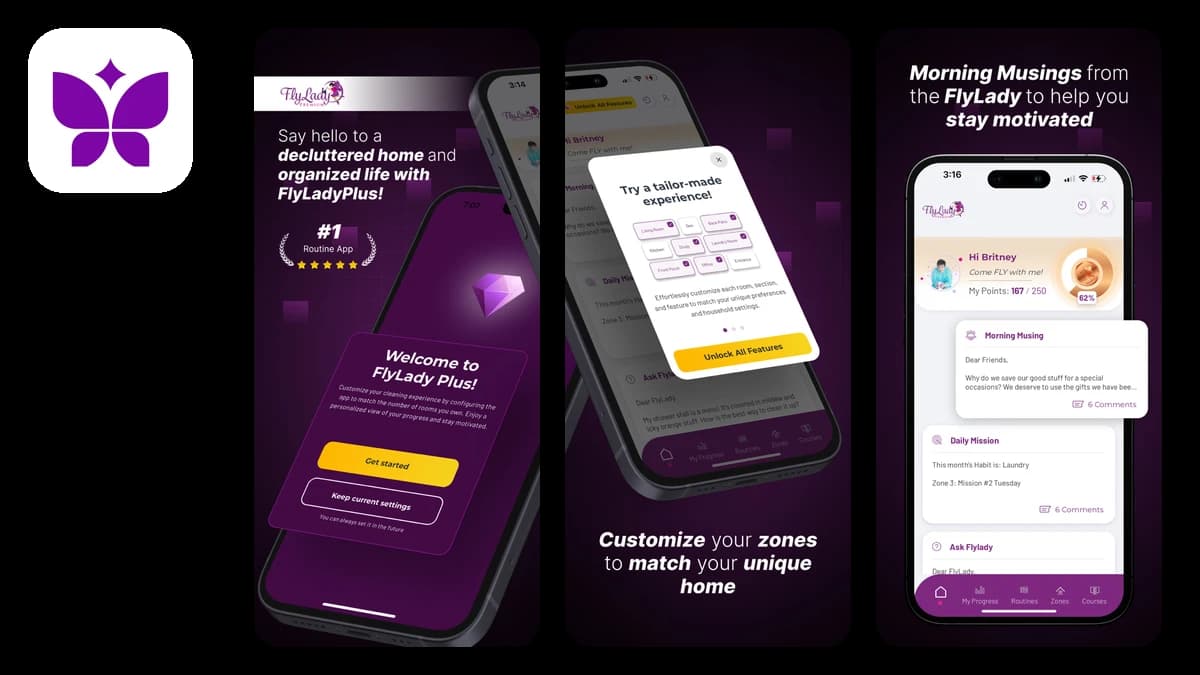
"Where do I even start" kills more decluttering attempts than laziness ever will. FlyLady answers it with the method Marla Cilley has taught for over two decades: the house is divided into zones, you work one zone at a time in short daily sessions, and pre-built morning and evening routines keep the progress from unraveling.
The app packages the whole system with room-by-room lists, reminders, and daily missions.
At 4.9 stars from more than 22,000 ratings, it ties Ridwell for the best rating here, and it's the only app on the list built around a decluttering method. If overwhelm is your specific blocker, I've also written about how to start decluttering when you're overwhelmed, and the short version matches FlyLady's philosophy: shrink the unit of work until starting stops being scary.
Benefits:
- Zone system breaks the house into one small area per week. You never face "the whole house" at once.
- Pre-loaded morning and evening routines keep decluttered rooms from sliding back.
- One concrete daily mission instead of a blank to-do list.
US store rating: 4.9
Price: Free to download; subscription unlocks the full experience
Decide what stays: Itemlist
Itemlist home inventory app
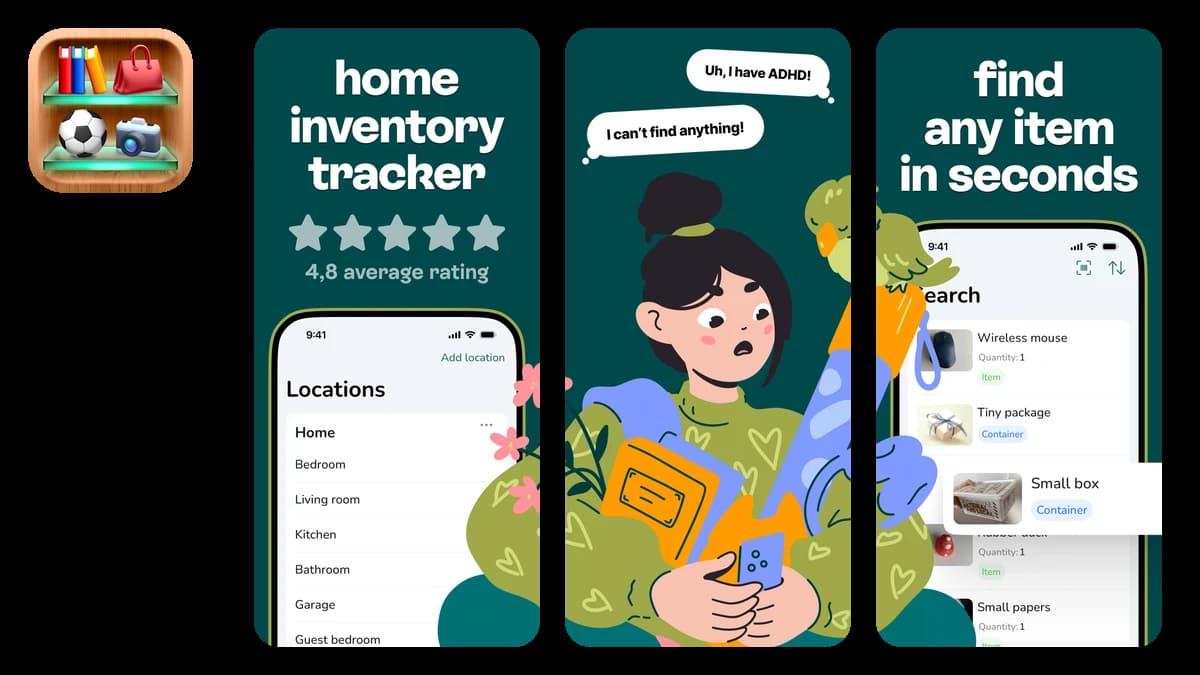
Full disclosure: Itemlist is my app. It's a home inventory app, not a decluttering coach, and that's exactly why it earns this slot. An inventory pass is a decluttering pass: you pick up every item once, and cataloging it forces the question the piles let you avoid. Does this stay?
It handles the two hardest decluttering problems as side effects of being an inventory. Sentimental items first. Photograph the thing properly, write its story in the notes, and letting the physical object go gets much easier, because the memory now has a home that isn't a box in the basement. Then duplicates. Search for the thing before you buy another, and the app answers with what you already own and where it lives, which is how cable drawers stop multiplying. And when something does leave the house, keep its record instead of deleting it. The photos and values stay, and the whole thing exports to CSV.
Benefits:
- Catalog room by room, with containers nested inside containers, the way your home is organized in real life.
- Search everything you own by name, brand, or serial number before buying another one.
- Photograph sentimental items before letting them go.
- Share a location with your household on PRO. Collaborators don't need PRO themselves.
- The record you're left with doubles as a home inventory for insurance.
US store rating: 4.7
Price: Free to start (100 items, 20 containers) / $29.99 per year or $59.99 lifetime for PRO, with a 1-week free trial
Sell the big stuff: OfferUp
OfferUp local buy and sell marketplace
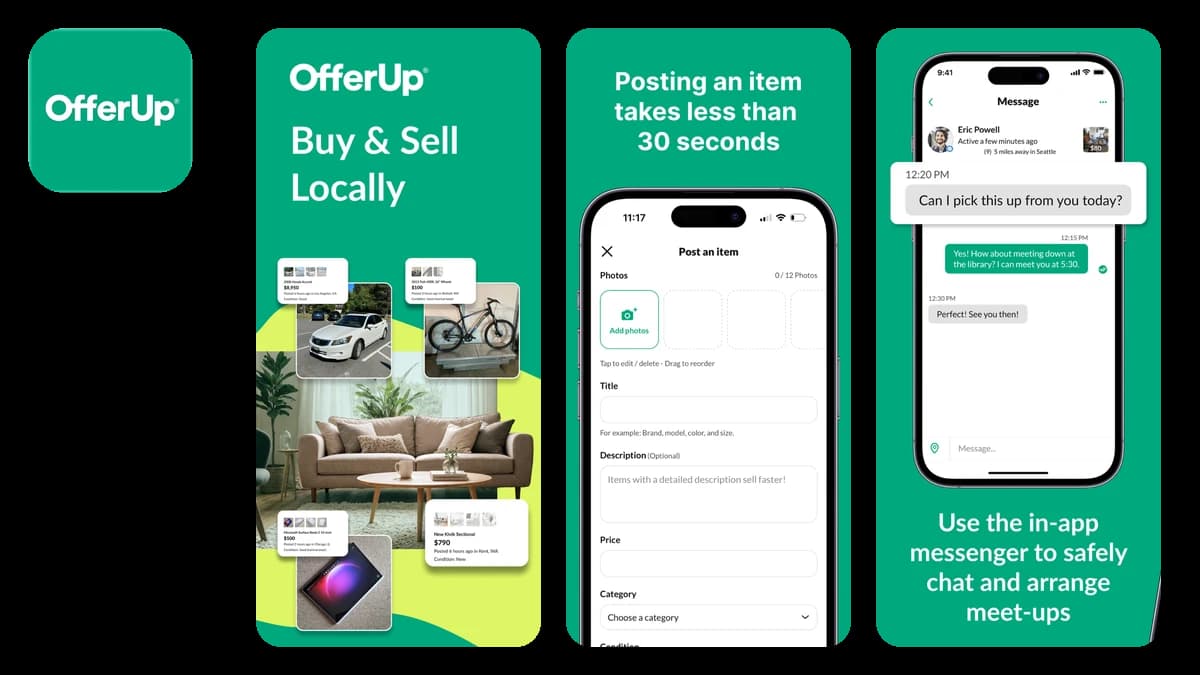
The dresser you're not keeping is worth real money, and it is not going in an envelope. For furniture, appliances, and anything you wouldn't ship, OfferUp is the widest local market on this list: 4.4 million App Store ratings, listings up in minutes, and local pickup, which means the buyer hauls the dresser down your stairs, not you.
I put OfferUp in my best moving apps roundup for the same reason it's here. Selling before a move and selling during a declutter are the same motion, and the cheapest thing to store, move, or dust is the thing you no longer own.
Benefits:
- Photos from your phone, a price, and the listing is up in minutes.
- Local pickup means bulky items leave without shipping labels or a truck rental.
- In-app messaging keeps haggling off your personal number.
US store rating: 4.8
Price: Free for local sales, with monthly caps on free listings per category
Sell the small stuff: Mercari
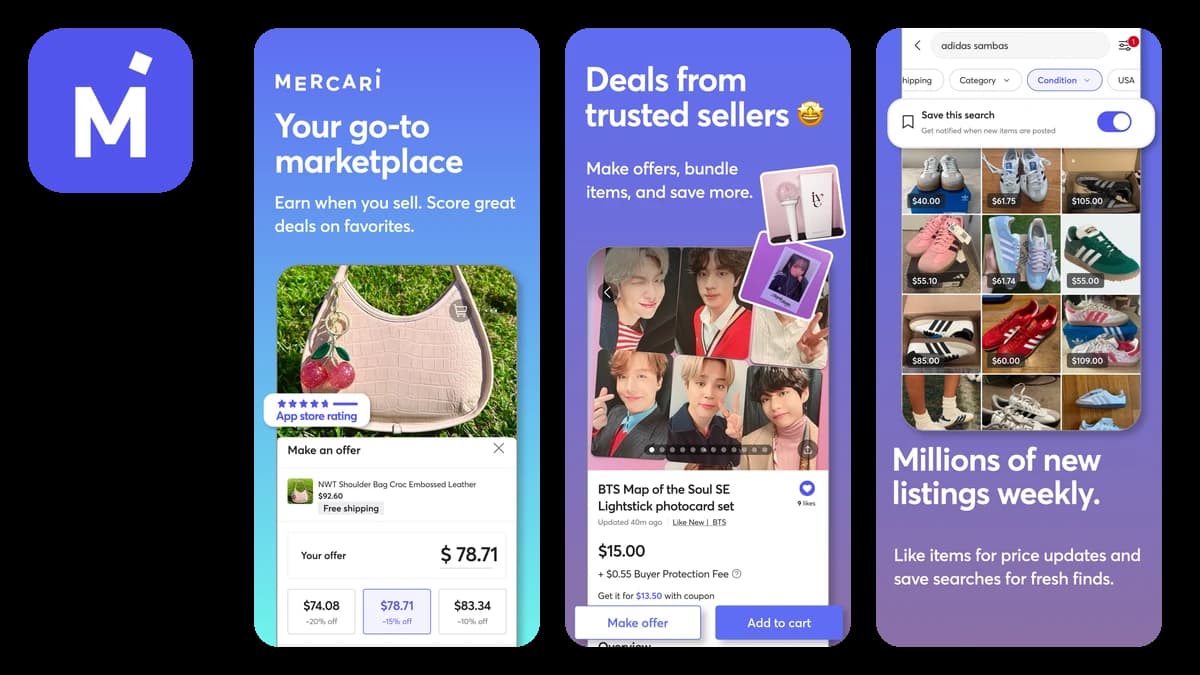
Mercari marketplace for selling by mail
For everything that fits in a padded envelope or a shoebox, Mercari is the by-mail counterpart to OfferUp: list it, and when it sells, print the label and ship it. 1.9 million ratings and a 4.8 average put it right beside OfferUp at the top of the marketplaces here.
Listing is free; Mercari takes a fee when the item sells, and the fee structure has changed a few times, so check the current terms before you price things.
Mercari's own 2019 survey of 1,000 US adults found the average household holding 42 unused items worth an estimated $723. It's a marketplace's survey about why you should use marketplaces, from 2019, so treat the exact numbers gently. The direction, though, matches what anyone who has decluttered a wardrobe already knows. Books are their own problem, and I wrote how to declutter books separately.
Benefits:
- Sell nationally by mail, which fits the small stuff local buyers won't drive for.
- Prepaid shipping labels from the app. A sale becomes an envelope, not an errand.
- Strong for clothes, games, gadgets, and collectibles, the classic declutter categories.
US store rating: 4.8
Price: Free to list; Mercari takes a fee when it sells
Give it away: BuyNothing
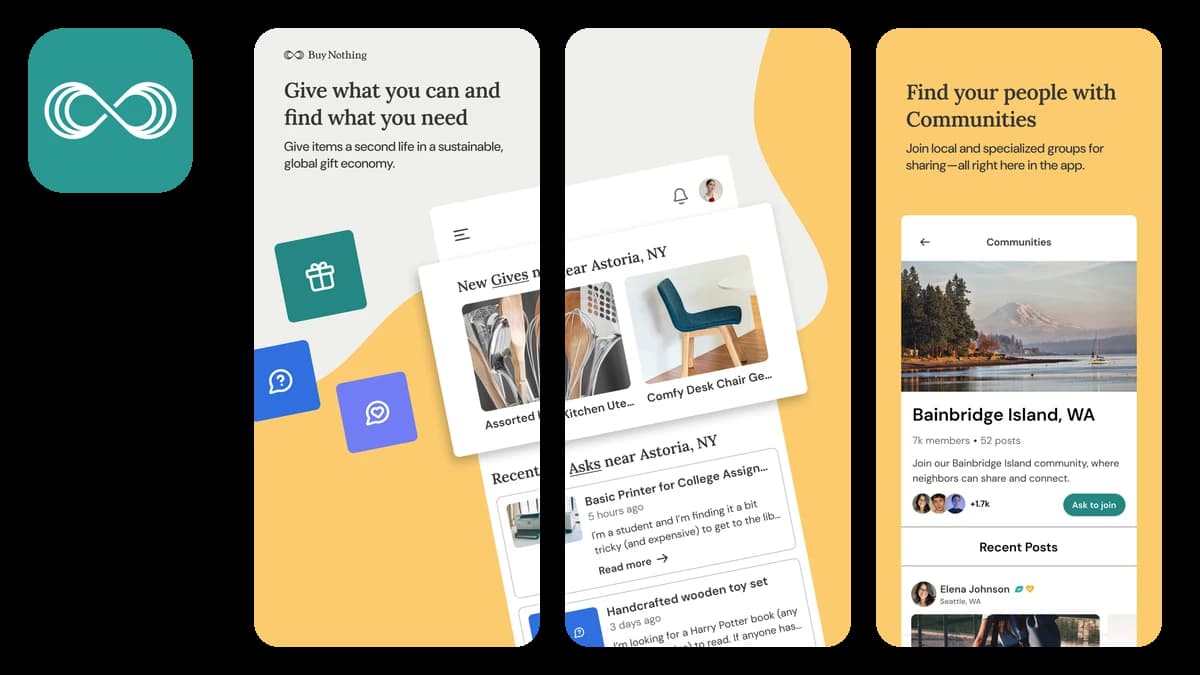
BuyNothing local gift economy app
Half-used craft supplies, outgrown toys, the kitchen gadget you used twice. Nobody buys those, and a neighbor will happily take them. The Buy Nothing Project is a hyper-local gift economy with over 14 million members across 50-plus countries: you post what you're giving, someone nearby picks it up, nothing costs anything.
Kids' stuff moves especially well, which pairs nicely with a proper round of decluttering and organizing toys.
The BuyNothing app is the lowest-rated app on this list at 4.3, and thousands of the project's local communities still run on Facebook groups instead. The movement is stronger than its app. Try the app first; if your neighborhood is quiet there, search Facebook for your local group before giving up on the idea.
Benefits:
- Zero-cost, zero-guilt way out for things that won't sell but shouldn't be trash.
- Hyper-local by design. Pickups are usually a porch handoff, not a drive.
- Asking is allowed too, which beats buying the thing you'll need for one weekend.
US store rating: 4.3
Price: Free
Recycle what's left: Ridwell
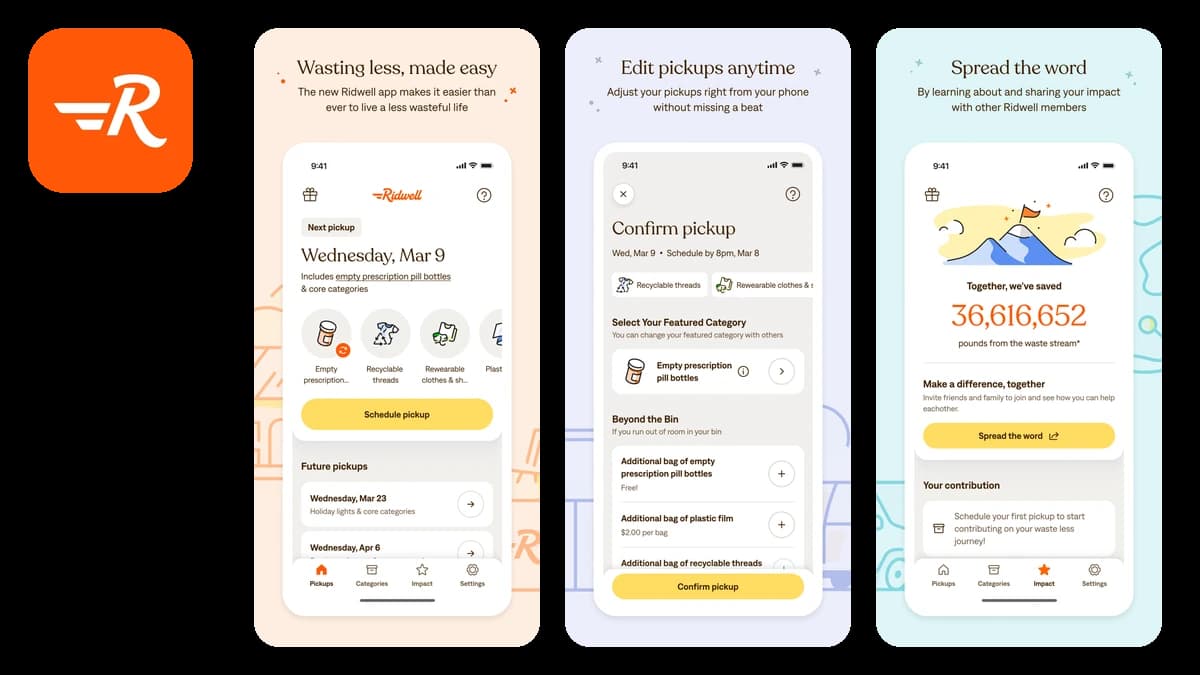
Ridwell hard-to-recycle pickup service app
Every declutter ends with the awkward pile: dead batteries, plastic film, old lightbulbs, threadbare clothes. Too guilt-inducing to trash, not accepted curbside. Ridwell exists for exactly this pile: a subscription pickup service that collects hard-to-recycle categories from your doorstep and reports where the material went. 8,600-plus ratings, averaging 4.9. The relief shows in the reviews.
The catch is coverage. Ridwell operates in a growing but limited set of US cities, with pickups from $20 per month and a mail-in option from $9 per bag after a $30 starter kit, so check your address first. If it's not in your area, Recycle Coach (4.8 stars, free) covers the basics where your municipality participates, with collection schedules and what-goes-in-which-bin lookups.
Benefits:
- Doorstep pickup for batteries, plastic film, lightbulbs, clothes, and rotating special categories.
- Takes the "I'll dispose of it properly someday" boxes out of the garage for good.
- Shows where collected materials end up, which the curbside bin never will.
US store rating: 4.9
Price: Pickups from $20/month; mail-in from $9/bag after a $30 starter kit; availability varies by city
Tody keeps the house that way
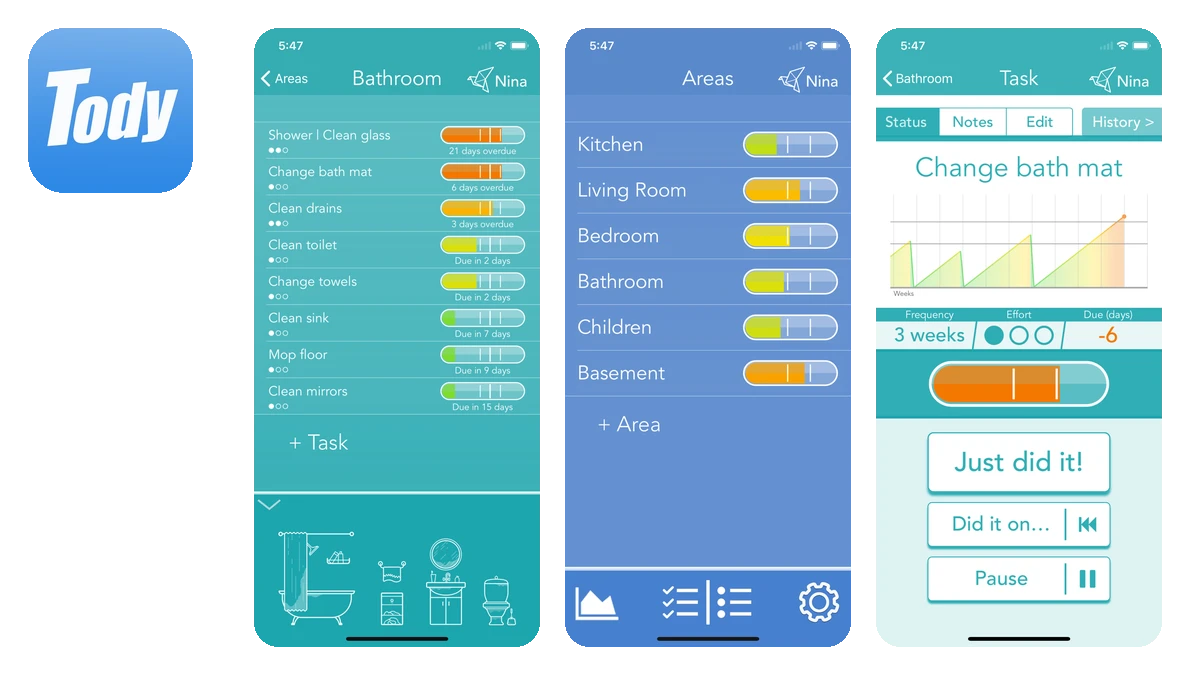
Tody needs-based cleaning schedule app
Decluttering fails a few weeks later, when the flat surfaces silently refill. Tody is the maintenance layer: instead of calendar-based chores, every task has an indicator that fills as the need grows, so you clean and tidy by actual state, not by arbitrary schedule.
Households can share the plan and claim credit for tasks, which turns upkeep into a running scoreboard instead of a nagging list.
If you'd rather have the gamified family version, Sweepy (4.7 stars, 10,000-plus ratings) schedules chores across the household and scores everyone. Both are cleaning apps by genre; they're in this post because a recurring five-minute reset is what makes a decluttered room stay one. For the habits behind the apps, my guide to overcoming common decluttering struggles covers the relapse problem directly.
Benefits:
- Needs-based indicators replace guilt-driven calendars.
- Per-room task plans fit a post-declutter reset in minutes a day.
- Household sync lets everyone see and claim tasks across devices.
US store rating: 4.8
Price: Free to download; premium unlock in-app
The decluttering apps I left out on purpose
I checked every app the other "best decluttering apps" lists recommend against the live App Store in August 2026, and the usual headliners are the ones that didn't make it. Clutterfree and Decluttify failed the rating check, TOSS and Centriq failed the existence check, and Sortly and the phone cleaners solve different problems than these lists imply. The details:
- Clutterfree is the most famous name in the category, from the Becoming Minimalist team, and the idea of a personalized room-by-room roadmap is good. But it sits at 3.4 stars from 105 ratings, with reviews complaining about the subscription paywall and a glitchy photo gallery. Every app I do recommend rates 4.3 or better; the same bar has to apply to the famous one.
- Decluttify launched in late 2025 with an AI-guided pitch and sits at 3.1 stars from 51 ratings on its first and only release. Maybe it improves; it hasn't yet.
- TOSS still appears on ranking lists as a daily-task decluttering app. No decluttering app named Toss exists there today; the closest match is an outfit-styling app last updated in 2022. Any list recommending it hasn't checked recently.
- Centriq is still recommended by the top-ranking list for this exact search, and the app shut down. I documented the whole story and where its users went in my Centriq alternative guide.
- Sortly shows up on most of these lists, but it's business inventory software priced for warehouses and job sites, not a decluttering tool for your hallway closet. I wrote an honest Itemlist vs Sortly comparison if you're weighing the two.
- Phone cleaners like Cleanup dominate the App Store results for "declutter," and they delete duplicate photos, not physical clutter. Fine apps, different problem.
One more thing I checked: the statistics these lists repeat. The "Princeton study proving clutter destroys focus" is an fMRI study of visual attention that never measured homes, clutter, or stress. The claim that you spend "a year of your life looking for lost things" I could not trace to any primary source. I left both out; the StorageCafe and DePaul numbers above are the ones that survived checking.
Which decluttering apps do you actually need?
Not all seven. Start with one of two: FlyLady if starting is the problem, Itemlist if deciding is. Add one app per pile as the piles appear, OfferUp or Mercari when things are worth money, BuyNothing when they're not, Ridwell for the recycling corner. Tody comes last, once there's a decluttered state worth defending.
None of the best decluttering apps will empty a shelf for you. What they cut is the friction between deciding something goes and it being gone.
If you only install one, make it the inventory. Deciding what stays is the stage every other stage depends on, and the inventory is the record that keeps paying after the declutter, once it has become the catalog that tells you what you own, where it lives, and what it's worth. Itemlist is free to start, 100 items and 20 containers, which covers your first decluttered room end to end. For the room-by-room order of attack, my declutter checklist is the companion piece.
Get Itemlist and start deciding
For more small-but-excellent picks, my best organization apps for iPhone roundup runs on the same rule: every app verified live, no zombie recommendations.
FAQ
Is there a free app to help me declutter?
Yes. BuyNothing and Recycle Coach are free to use, FlyLady and Tody are free to download with paid unlocks, and Itemlist is free for your first 100 items and 20 containers. You can run a serious declutter without paying anything; subscriptions mostly buy convenience and depth.
What's the best app for selling stuff when decluttering?
Two, split by size. OfferUp for furniture and anything a buyer should pick up locally, Mercari for small items you can mail in an envelope or shoebox. Both are free to list (OfferUp caps free listings per month), so photograph the item once and post wherever it fits.
How do I start decluttering when I'm overwhelmed?
Shrink the unit of work. FlyLady's method uses one small zone and short daily sessions, and it works because finishing a drawer today beats planning a garage for three weeks. My guide on starting when overwhelmed breaks down the first hour.
How do I declutter sentimental items without the guilt?
Photograph the object well, write down its story, then let the object go. The memory gets a home in the app, and the shelf space comes back. It's the technique behind deciding what to keep, and an inventory app makes the photo-and-story part a thirty-second habit.
Can an app track what I donate?
An inventory app can, with one habit change: when something leaves the house, keep its record instead of deleting it. In Itemlist the photos and values stay searchable, and the location exports to CSV with values included, which is a solid record for a donation receipt or an insurance file.