How to Document Valuables and Record Serial Numbers

Contents·13
To document your valuables, go room by room and, for each item worth money, capture six things: what it is, the brand and model, the serial number, roughly its value, a photo, and where it lives. Record the serial number for anything that has one, because that single string is what turns "I think I owned a TV" into proof you can act on. Keep the record somewhere outside the house it describes.
That last detail is the one most people get wrong, so I'll come back to it. The part almost nobody does properly is the serial numbers, and it pays off in ways that go beyond a smoother insurance claim. If insurance is your main reason for doing this, my home inventory for insurance guide covers that side in depth. Serial numbers are where I want to start.
Why serial numbers matter more than a photo
A serial number is the one detail that ties a specific object to you. A photo proves a TV like yours existed. The serial number on the back of that exact TV, written down before it walks out the door, is what lets a police database, a pawn shop, or an insurer connect the recovered unit to your name. It's the difference between a category and a receipt.
This is where documenting valuables stops being only about insurance. When police recover stolen goods, they check serial numbers against what owners reported. Nashville's police department runs the decades-old Operation Identification property-marking program, and their guidance is blunt about the failure mode: "When an owner reports an item stolen to the police and he does not have the serial number(s), the item will not be traceable via the serial number to the owner." No recorded serial number, no trace. The recovered item sits in an evidence locker with no way home.
Those checks run at scale. Law enforcement can search more than 1.2 billion transactions from pawn shops, secondhand dealers, scrap metal yards, and ecoATM kiosks across all 50 states through LeadsOnline, the system many departments use to match recovered and pawned goods against theft reports. A serial number is the key that makes your item findable in that haystack. Without it, your stolen laptop is one of ten thousand identical laptops.
Theft is rarer than the fear of it, which is exactly why people are unprepared when it happens. Theft made up just 0.6% of homeowners insurance losses in 2023, and about one in 850 insured homes files a theft claim in a year, with the average theft claim running $5,524, per the Insurance Information Institute. You'll probably never need this. The afternoon you do, the serial numbers you wrote down years earlier are doing all the work.
Where to find the serial number on each kind of valuable
Most people assume only electronics have serial numbers, so they photograph the laptop and stop. Plenty of other valuables carry one, and the number usually hides in a predictable spot once you know the category. Knowing the exact spot ahead of time turns a frustrating hunt behind the appliance into a ten-second job. The table below is where to look.
| Valuable | Where the serial number usually lives |
|---|---|
| TVs, monitors, laptops | Sticker on the back or underside, often near a barcode and the model number |
| Phones and tablets | In Settings under About, and etched on the SIM tray or the back glass |
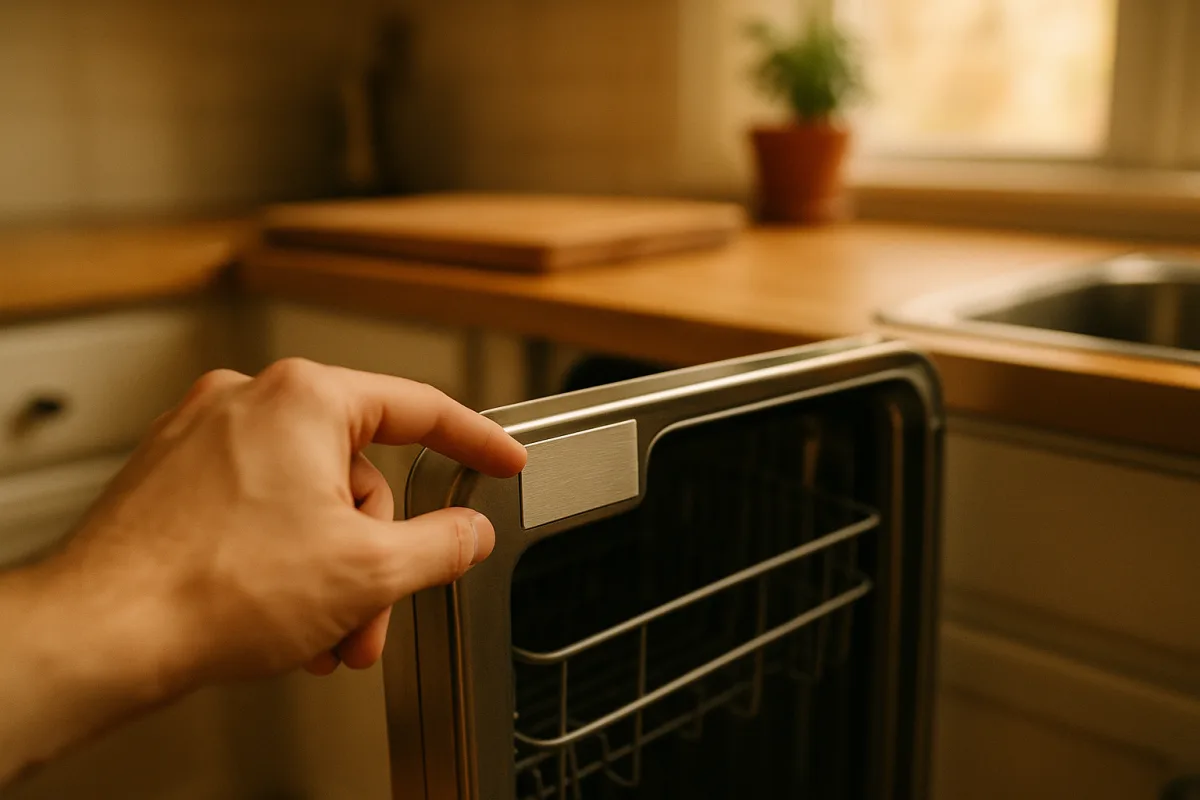
| Appliances (fridge, washer, dishwasher) | On a metal data plate, often inside the door frame, on the back, or behind a kick panel |
| Power tools | Stamped or on a nameplate on the motor housing, near the model number |
| Cameras and lenses | On the bottom of the body and on the barrel or mount of each lens |
| Bicycles and e-bikes | Stamped into the frame under the bottom bracket, where the cranks meet |
| Firearms | On the receiver or frame, the legally serialized part |
| Watches | Engraved on the caseback or between the lugs, plus on the warranty card |
| Jewelry | Often none from the maker. Use an appraisal or a photo of any hallmark instead |
Two notes on that last row. Most jewelry has no manufacturer serial number, so an appraisal document and a clear photo do the job a serial number would. And for anything with a data plate that's awkward to read, photograph the plate itself. A sharp photo of the sticker beats squinting at eight point type on the back of an appliance a year from now, and it captures the model number in the same shot.
What to capture for each item
For each valuable, the record that actually holds up has six fields. You don't need all of them for a set of dishes. You do need them for anything you'd be sick to lose, and getting them down once means you never have to reconstruct the details later from a foggy memory or a photo that happens to show the item in the background.
- Name and category. "Sony 65-inch OLED TV," not "television."
- Brand and model. The model number is usually printed right next to the serial number, so grab both at once.
- Serial number. For anything that has one. This is the field people skip and later wish they hadn't.
- Value. What you paid, or what a replacement costs today. A rough number beats a blank, and blanks are what get argued over at claim time.
- Photos. The item itself, plus a close-up of the serial plate. Insurers, and your own memory, both trust a photo.
- Receipt. For big-ticket and recent purchases, where the exact price matters. Older items can lean on a dated photo and a fair estimate.
That list is not my invention. It's the same shape insurers and regulators ask for. The National Association of Insurance Commissioners, the body that represents state insurance regulators, puts it plainly: "an accurate home inventory gives your insurance carrier the information they need to help settle your claims," and their own free inventory app is built around photos and scanned barcodes. If you want the full insurance-specific version of what to document and why, my deeper guide to documenting belongings for insurance goes category by category.
How to do it without losing a weekend
Documenting the whole house in one sitting is why most inventories never get finished. So don't. The valuables are a small slice of what you own, and they're the slice that matters here. Document the valuables that would actually hurt to lose, and record a serial number for every one that has it. The rest of your stuff can wait for a rainy afternoon that may never come, and that's fine.
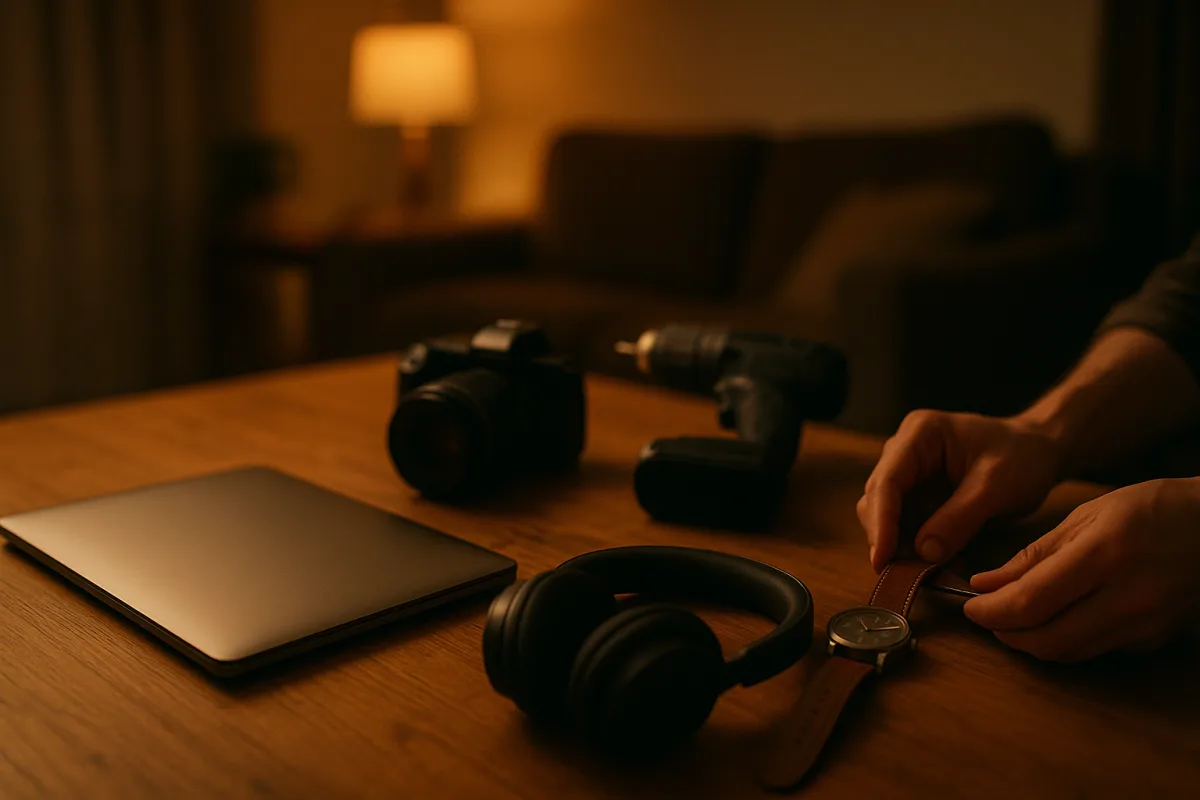
Start with the ten most valuable things you own and do those first: the electronics, the tools, the camera kit, the bike, the jewelry, the appliances. That's an evening, not a project. Photograph each one, catch the serial plate in a second shot, jot the value, and move on. Once the expensive things are logged, you've done the 20% that carries 80% of the risk. Fill in the rest whenever you have ten spare minutes and the mood.
Do a quick pass again once a year, and add new things when you buy them. A valuables record that reflects what you actually own right now is worth far more than a perfect one you made in 2023 and never touched.
Where to keep the record, and where not to
A valuables record stored only in the house it describes is a record that burns in the same fire. This is the mistake I mentioned up top. A printed list in a drawer, or a spreadsheet on the laptop that gets stolen alongside everything else, protects nothing. Keep the record somewhere that survives the loss: cloud storage, or a copy held by someone outside the home.
There's a sharper version of this trap. Plenty of people do record serial numbers, on the original box or the warranty card, then store the box in the garage next to the item. If a burglar takes the item, the box often goes too, and now the proof is gone with the thing it was meant to prove. The serial number has to live somewhere separate from the object. That's the whole argument for a digital record you can reach from your phone.
One caution the other direction. Keep your serial numbers private. Record them for yourself, but don't post them on resale listings, social media, or public forums, because a serial number is also what someone else needs to file a bogus warranty claim against your product. Private record, yes. Public post, no.
How Itemlist handles serial numbers
I build Itemlist, a home inventory app for iPhone and iPad, and the serial number problem is one I had a specific opinion about while building it. Every item and container has a real serial-number field, and the barcode scanner fills it for you. I deliberately made the scanner read the code as text straight into the serial field rather than trying to look the product up online, because the thing you want preserved is the exact string on your exact unit, whatever the model turns out to be. Search then covers serial numbers alongside names, brands, models, and notes, so "which of these three identical drills is under warranty" is one search away.
The rest follows the method above. Each item holds its own photos. The app is organized like a real home, with locations, rooms, and containers that nest inside other containers, so a valuable's record also tells you the gray bin in the garage it lives in. The CSV export is free and per-location, 23 columns including values and serial numbers, which is the shape a claim packet or a police report wants. It works offline, and on the Pro plan you can share a location with the people you live with so you're not the only one who knows what's in the house. The free plan covers 100 items and 20 containers, which is plenty for the valuables that actually matter.
If you'd rather start on paper or in a spreadsheet, that's genuinely fine. My free home inventory checklist walks you room by room, and the home inventory template is a ready-made spreadsheet with a serial-number column already in it. Both are free, no email required. The tool matters far less than the habit. What matters is that the serial numbers exist somewhere before you need them.
FAQ
Do I really need serial numbers, or is a photo enough?
A photo proves an item like yours existed. A serial number proves that specific unit is yours, which is what matters for theft recovery, warranty and repair claims, and confirming ownership of a recovered item. Use both. Photograph the item, then photograph its serial plate.
Which of my valuables actually have serial numbers?
Most electronics, appliances, power tools, cameras and lenses, bikes, firearms, and watches carry one. The number usually sits on a sticker or metal plate on the back or underside, or on a data plate inside an appliance door. Most jewelry has none, so use an appraisal and a photo instead.
Do police actually use serial numbers to recover stolen property?
Yes. Recovered and pawned goods get checked against theft reports through systems like LeadsOnline, which law enforcement uses to search over a billion secondhand transactions. Without a recorded serial number, a recovered item can't be matched back to you, so it never comes home.
Is it safe to write down my serial numbers?
Recording them privately, in your own inventory, is safe and smart. The risk is making them public. Don't post serial numbers on resale listings, social media, or forums, because that's exactly what someone needs to file a fraudulent warranty claim against your item. Keep the record to yourself.
Do renters need to document valuables too?
Yes. Renters insurance pays out on your personal property just like a homeowners policy, and at claim time you're the one who has to prove what you owned. A renter with a burgled apartment and no record is reconstructing it from memory. Documenting valuables protects the claim, whether you own the walls or rent them.
Document the valuables now, while nothing's wrong
The best time to record a serial number is a quiet evening when everything you own is exactly where it should be. The worst time is after it's gone, when the number you need is on a device that isn't in the house anymore.
So pick the ten things you'd most hate to lose and log them tonight. Grab the free home inventory checklist or template if paper suits you, or download Itemlist if you'd rather it live on your phone with the photos and serial numbers attached. Ten items and their serial numbers, tonight, is a real start.


![Decluttering Reminders, a Full Screen Camera, and a New Look [Itemlist App Update 2.1]](/_next/image/?url=%2Fstatic%2Fimages%2Fblog%2Fitemlist-2-1-update%2Fitemlist-2-1-app-update.jpg&w=3840&q=75&dpl=dpl_7rj4BuEVmXtjpAkqRriBQByUo2Xh)